

Dean's Welcome
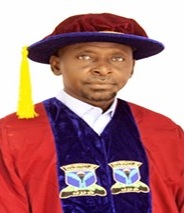
Prof Mohammed
Babayo Tukur
Faculty overview
Faculty of Allied Health Sciences comprised by Departments of Medical Laboratory Science, Medical Radiography, Nursing Sciences, and Medical Rehabilitation (Physiotherapy). These Departments were established in 2003 by the Senate of the University.
Philosophy and Objectives
The broad philosophy of the Faculty of Allied Health Sciences is to provide sound academic and professional background for the training of students, who would be capable of working in areas of their profession. The Faculty is also aimed at empowering the students with intellectual capacity to undertake further training towards specialization.
The philosophy of the Faculty is to provide innovative academic programmes to a highly qualified diverse student population with focus on developing outstanding health care professionals as future leaders in health care. The Faculty has a commitment to global leadership in health care education through undergraduate and postgraduate programmes and to the concept of lifelong learning.
Mission
The mission of the Faculty is to educate students in Allied Health Disciplines who are knowledgeable, humanistic and service oriented and who would function within the scope of their practice disciplines, to produce post professional allied health practitioners and scientists who would be researchers and educators, and clinicians capable of functioning in research institutes, universities and hospitals to achieve specific educational, research and clinical goals. The Faculty will draw upon the resources in the College and University to take on leadership roles in the training of Allied Health personnel that will provide the best and evidence based care and quality services for the population in Northeast region of Nigeria.
Vision
To be the faculty that houses the sought after allied health professional programmes among universities in Nigeria and West Africa.
Core Values
Altruism, Compassion, Excellence, Integrity, Efficiency, Team work, and Professionalism.
Objectives
Collaborating with and/or supporting other programmes at the college and university. The overall contents of the curriculum in the Faculty shall satisfy the core health standards prescribed by the professional regulatory bodies. Graduates of the faculty will be able to:
- Apply knowledge and theoretical construct from related social and behavioral sciences needed to plan and implement acceptable evidence-based intervention strategies for practices in the disciplines.
- Demonstrate skills and competencies needed to define and address the problems of illness and to integrate these results with socio cultural, economic and political concerns to reach decisions.
- Demonstrate competencies in the recognition of health indicators and evaluation of factors in the home and workplace that may cause diseases, dysfunctions, human suffering and premature deaths.
- Demonstrate skills and competencies needed to distinguish the relative effectiveness of different procedural and public health interventions utilizing appropriate principles and methods.
- Demonstrate skills and capacity of effectively plan, manage, implement, and evaluate care and services as well as in advocacy related to behavioural, social, environmental and cultural factors that affect health and health – related behaviours.
- Apply instructional and research skills in the technical and scientific disciplines that have direct or indirect impact on the prevention of diseases and promotion of health and wellness.